Getting there on their own
Walking to school alone: how to know they are ready.
Almost every parent asks the same question in the same week of September, and almost nobody gets a straight answer. There is no age that makes a child ready. There is a set of things they can either do or not do yet, and you can check them one at a time.
There is no legal age — but there is a local answer
In the UK there is no law setting a minimum age for a child to walk to school unaccompanied, and no fixed age in most US states either. What does exist, and what actually matters day to day:
- Your school's policy. Many primary schools will not release a child at the end of the day to walk home alone below a certain year group, and some ask for written permission. Ask the office; the answer is usually specific and immediate.
- Local authority guidance on unsupervised children, which is framed around whether a child is left "at risk" rather than around an age.
- The route itself. A quiet 400 metres with one zebra crossing is a different proposition from a ten-minute walk along a main road, whatever the child's age.
Six things to check before the question of age
Watch for these on walks you are already doing together. The useful trick is to stop leading: walk half a step behind and let them make the decisions while you are still there to catch a bad one.
- They cross roads without being told to. Not "they stop when you stop" — they stop, look properly in both directions, wait for a real gap, and keep looking while crossing.
- They judge moving cars, not just parked ones. Children who are otherwise careful often misjudge the speed of an approaching car. This is the single most common gap.
- They know the route in both directions and can say it out loud: left at the postbox, past the chemist, cross at the lights.
- They can recover from a surprise. Roadworks, a closed gate, a friend calling them over. Ask "what would you do if…" and listen for a plan rather than a shrug.
- They will say no to an adult. Including a polite, friendly, plausible one. Practise the wording; it is harder for children than we assume.
- They want to. A child talked into it will do the walk anxiously, and anxiety is what makes people step into roads.
Practise it as a rehearsal, not a lecture
Three or four weeks before the first solo walk, change the shape of the journey:
- They lead, you follow. You say nothing unless there is danger. Do this until it is boring.
- Walk it at the real time of day. The junction that is calm at 10am is a different place at 8:35am.
- Walk it in bad weather. Hoods and umbrellas remove peripheral vision and hearing; that is worth discovering with you there.
- Hang back. Follow thirty metres behind for a few days. Most parents learn more from this than from any conversation.
- Agree the exceptions in advance. What happens if it is dark, if they miss you at the gate, if a friend is off sick and they would be walking alone rather than as a pair.
What you agree on the first solo morning
Keep it to three or four things a nine-year-old can actually remember:
- The route, with no shortcuts, even with friends.
- Who they go to if something goes wrong — a named shop, the school office, a specific neighbour. "A grown-up" is not a plan.
- What they do if they are running late: carry on and tell someone at school, rather than turning back or hurrying across a road.
- How you will know they arrived.
That last point, honestly
"How will I know they got there" is the part that keeps parents standing at the window, and it is where families reach for technology. It is worth being clear about what each option does.
The school may already tell you: many register systems send a message if a child is marked absent. That is the simplest answer and it costs nothing. A phone call or a text from the child works if they have a phone and remember to send it, which they will for about a week.
A family locator app removes the remembering. Our own app, Geopapa, lets you save the school as a place and get a notification when your child's phone reports arriving there, so the check-in happens without anyone doing anything. It depends on the child carrying a phone that has signal and the right permissions, and an alert can arrive late if reception is poor — it is a convenience, not a guarantee, and it is no substitute for having practised the route.
A look at Geopapa
Scroll through the images or tap to view a larger preview.
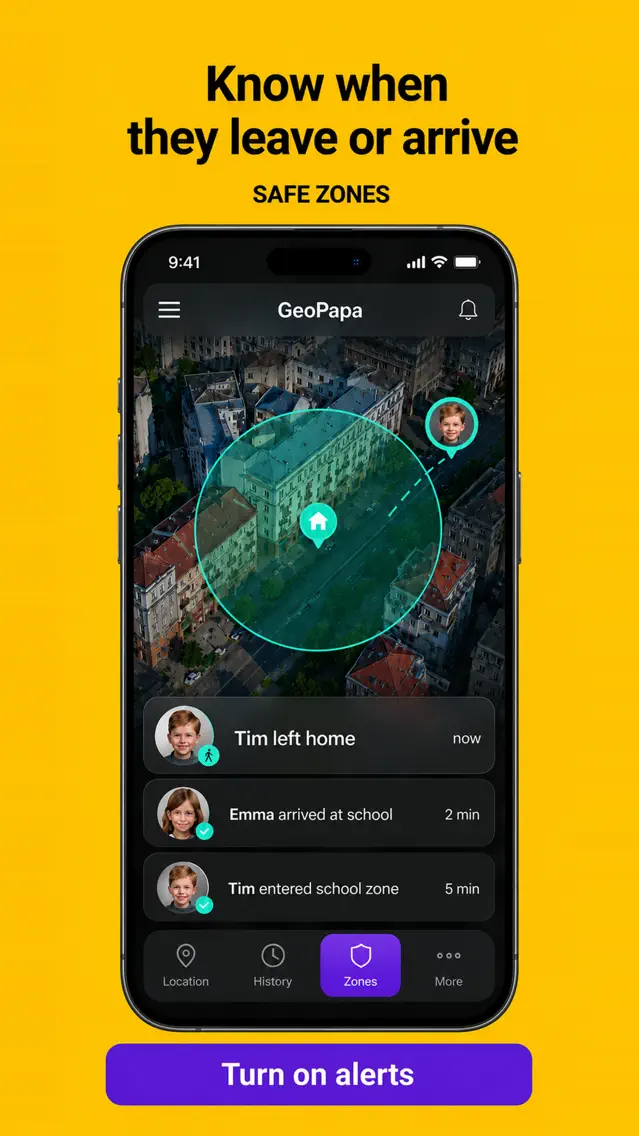
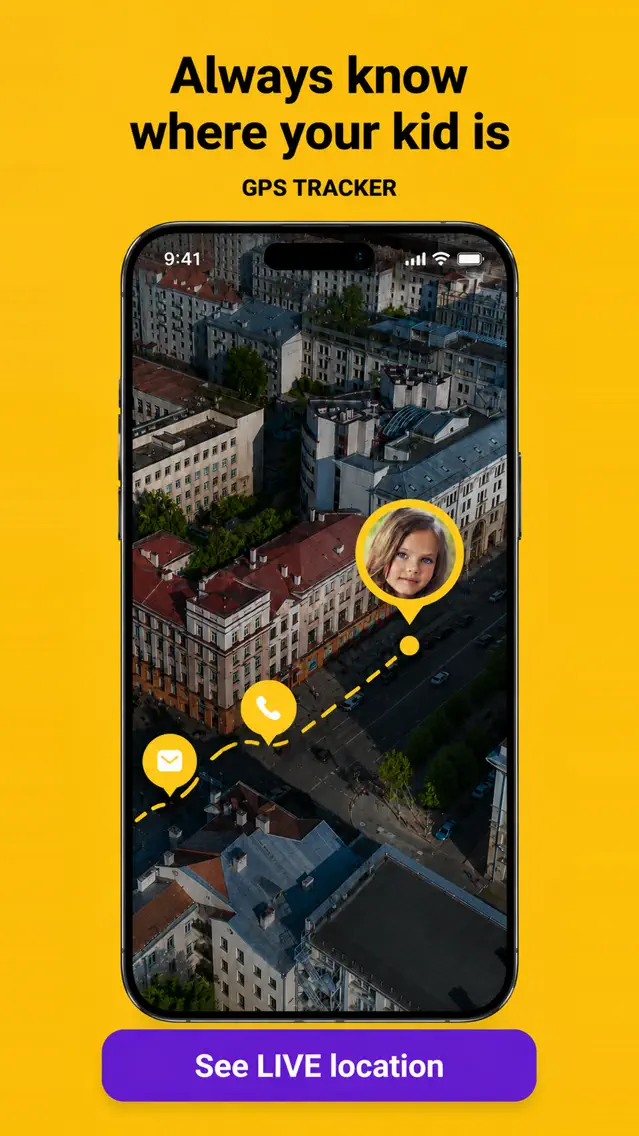
Source: the official Geopapa App Store listing. Promotional previews in English; the interface can vary by version.

Geopapa: arrival alerts for the school run
Save school and home as places, choose arrival or departure, and let the notification do the checking. Made by the people who write this site.
Get Geopapa for ParentsiPhone & Android · Free to download · In-app purchases
Common questions
Is there an age at which most children walk alone?
Practice varies widely between countries and between streets in the same town, so quoting an average is not much help. Judge the child against the route, and ask the school what year group they release unaccompanied.
Is it safer for them to walk with a friend?
Usually yes for confidence and for being noticed, but two children together also talk, mess about and cross badly. Practise with the friend present, not only one-to-one.
Should they have a phone for the walk?
A phone solves reaching you and creates its own distractions on a pavement. If you are considering it, our first phone checklist covers what to set up before the handover, including the rule about not using it while walking.
What if they are anxious about it?
Go back a step rather than pushing on: more rehearsals, a shorter first leg, or walking with them to a halfway point for a term. Readiness moves quickly at this age, and a bad first week is worth avoiding.
School travel policy, road safety schemes and the legal position on unsupervised children differ by country and local authority. Your school office and council website are the authorities; this page is not.